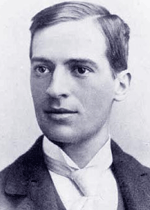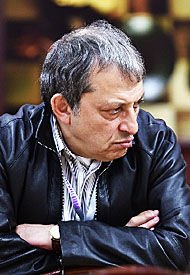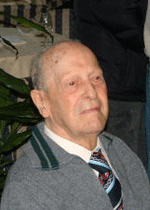
Petroff Alexander Dmitrievich (12.02.1794 – 22.04.1867)
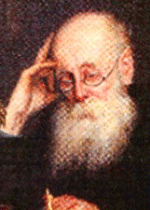
Leading player in Russia at the beginning of the period when chess was first seriously studied in that country. Best player in St. Petersburg before he was 20. In 1840, at the invitation of Field Marshal Prince Paskevich of Poland, Petroff went to Warsaw as Under-Secretary of State where he married and lived for the
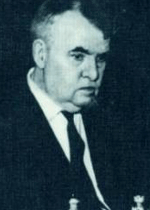
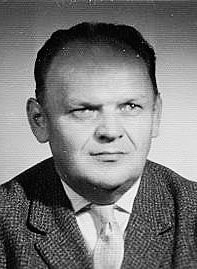
Panov Vasily Nikolayevich (01.11.1906 – 18.01.1973)

Russian international Master (1950), theorist and journalist. Panov won the Moscow championship in 1929, competed in six USSR Championships from 1929 to 1948 with modest results, and achieved his best tournament win (+10=6-1) at Kiev 1938. His reputation was, however, chiefly formed by his theoretical and literary abilities. He contributed greatly to the theory of

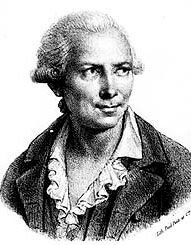
Philidor François-Andre Danican (07.09.1726 – 31.08.1795)

Philidor was born in Dreux near Versailles, France. He started playing chess when he was 10 and was then trained by Sire de Legall another strong French player of that time. In 1744 Philidor played two chess games blindfolded simultaneously in public in Paris. He said he had learned how to do this when he

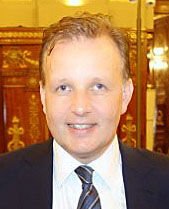
Piket Jeroen (27.01.1969)

Dutch Grandmaster (1989), Dutch Champion in 1991, 1992 and 1994. Dutch Champion U13, U16, and many times U20, Silver medal at the World Cadet Championship. Best results: won or shared first at Brussels Iclicki Open 1987, Spijkenisse 1988, Munich 1989, Ostende 1989, Groningen 1992, Dortmund 1994 and Tilburg 1996. In matches, he lost to John

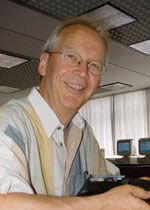
Pfleger Helmut Dr. (06.08.1943)

German Grandmaster (1975) born in Czech Republic. Doctor of medicine. German U20 Champion in 1961. His first notable success was in 1965 when he battled against Wolfgang Unzicker for the first place in the West German championship and the result was that they shared the title. He has represented Germany in some seven Olympiads between

Pillsbury Harry Nelson (05.12.1872 – 17.06.1906)

American chess player and chess theorist. One of the strongest chess players from the end of the nineteenth to the beginning of the twentieth centuries. A professional chess player, he edited chess columns in American newspapers. He began to play chess at the age of 16. He moved to Boston to study commerce and spent

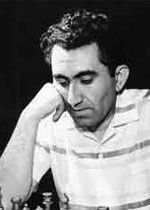
Petrosian Tigran Vartanovich (17.06.1929 – 13.08.1984)

Soviet and Armenian Grandmaster (1952), Honoured Sports Master. Ninth World Champion in 1963-1969. Editor of the chess weekly magazine 64. Petrosian started to play chess at Tbilisi Pioneers Palace under the coaching of Ebralidze. At 16 he received the Master title and two years later, he played at the finals of the USSR Championships. The

Petrosian Arshak Bargatovich (16.12.1953)

Armenian Grandmaster (1984) who is living in Hungary. Father-in-law and coach of Peter Leko and coach of the Armenian national team which won three Olympiads. Best results: won or shared first at Yerevan 1980, Albena 1980, Bagneux 1981, Novi-Sad 1983, Lvov 1984 and Yerevan 1984. Also, second at Dortmund GM in 1998. A participant in

Pachman Ludek (11.05.1924 – 06.03.2003)

Czech Grandmaster (1954), author of 80 books and a journalist who was living for many years in West Germany. Editor of the FIDE magazine for many years. Czechoslovakian Champion in 1946, 1953, 1957, 1958, 1961, 1963 and 1966. Best results: winner at Arbon 1946 and 1949, Bucharest 1949, Mar del Plata 1957, Santiago 1957, Lima

Paoli Enrico (13.01.1908 – 17.12.2005)

Italian International Master, International Arbiter (1964), organizer of the Reggio Emilia and a schoolteacher by profession. Paoli was Italian Champion in 1951, 1957 and 1968 and played for Italy in the Olympiads of 1954, 1970, 1972 and 1976. His best international result was first at Vienna 1950-51 as a result of which he obtained the