Chess Personalities

Chess Personalities

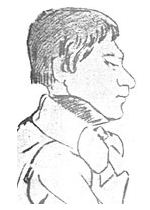
Kempelen Farkas (1734 – 1804)
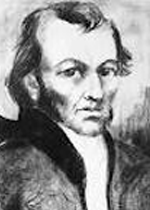
A Hungarian who was more commonly known by the German version of his name, Wolfgang von Kempelen.  Kempelen invented the first chess-playing ‘automation’ and was extremely proud of the mechanism which controlled its arm, which later became of major importance in prosthetics.  It was originally created as an amusement tool for the court of the
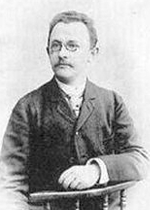
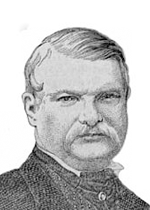
Judd Max (27.12.1852 – 25.05.1906)

An American chess expert born in Poland who immigrated to America in 1862.  Judd was also the U.S. consul in Vienna. Best results: Philadelphia 1876 and Vienna 1897, 2nd; Chicago 1874, 3rd; Cleveland 1871, 4th and Western Chess Congress, 1st. In 1881 Judd lost a chess match against George Henry Mackenzie held in St. Louis

Kieseritsky Lionel Adelberto Bagration Felix (01.01.1806 – 18.05.1853)

Born in Tartu, Kieseritsky was supposed to follow his father as an advocate, but instead, he became a teacher of mathematics. He was becoming increasingly devoted to chess and sailed to France in 1839 just in time to meet Louis Bourdonnais, who struggled to give him knight odds.  Settled in the Cafe de la Régence,

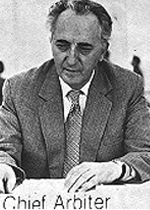
Kazic Bozhidar (02.02.1921-07.05.1996)

Yugoslavian chess player, International Arbiter, author and journalist.  Kazic has been the Chairman of the Rules of Chess Commission between 1978 and 1994, Zonal President between 1978 and 1982 and he is an Honored Member of FIDE since 1975. He was the General Secretary of the Yugoslavian Chess Union for the periods 1951-1964 and 1971-1976,

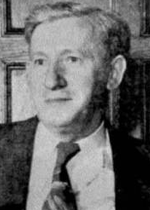
Kupchik Abraham (15.03.1892 – 26.10.1970)

Kupchik was born in Brest-Litovsk and came to the United States in 1904. He was an outstanding Master for many years.  Kupchik worked as an accountant for Metro-Goldwyn-Mayer and lived in New York. Best results: Manhattan Chess Club Champion eleven times, the New York State Championship twice (1915 and 1919), the National Chess Federation title

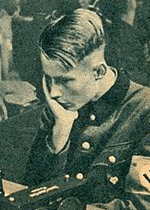
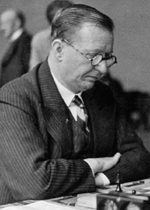
Junge Klaus (01.01.1924 – 27.04.1945)

German player born in Concepcion (Chile) to German parents, who moved to Hamburg in the 1930s.  Junge was the most promising German player for many generations. After some local successes, he tied for first place in the German Championship 1941 (with Paul Schmidt) at the age of seventeen.  The same year he came fourth to

Johner Paul and Hans

Strong Swiss chess players/brothers in the first half of the 20th century. Paul, 10.09.1887-25.10.38, Zurich.  Paul Johner was Swiss Champion six times between 1908 and 1932. In 1908, 1928 and 1932 he shared the title with his brother Hans. Best results in the international tournaments: Copenhagen 1916 and 1924, 1st-2nd; Berlin 1917, 1st-2nd; Gothenburg 1920,

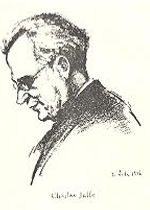
Jaffe Charles (12.07.1941)

American player born in Belarus (then Russian Empire) who immigrated to the USA in 1896. Jaffe was one of the strongest players in America between 1905 and 1930. Jaffe worked as a weaver in the silk mills of New York, New Jersey, and Pennsylvania until 1910 when he became a professional chess player. At the First

Jaenisch Carl Friedrich Andreyevich Von (11.08.1813 – 17.03.1872)

Chess player born in Finland, Jaenisch was an assistant professor of mechanics. In the army,  he was commissioned in the Engineers and he rose to the rank of Major. In 1838 he began to write a book on chess openings and two years later, in 1840, he left the army “because he loved chess so

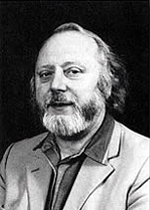
Whyld, Kenneth (06.03.1926-11.07.2003)

British world-famous historian and co-author of the Oxford Companion of Chess with David Hooper (1984), a standard work of reference on chess history. Editor of Chess Students’ Quarterly, Chess Reader (1950s) and Quotes and Queries column in the British Chess Magazine. Also the author of Alekhine-Nazi Article, Chess Columns – A List (2003), Guinness Chess – The